If your imaging report says herniated disc and your next thought was "I'm going to need surgery," you're not alone — and you may be wrong. Non-surgical herniated disc treatment works for the majority of patients, and we've spent 20 years helping people in Antigo and across northern Wisconsin avoid the operating table.
Herniated, Bulging, or Degenerative — What Your MRI Report Actually Means
These three terms show up on MRI reports constantly, and most patients arrive using them interchangeably. They're related but not the same, and the distinction matters for how we approach treatment.
A herniated disc occurs when the soft inner material of an intervertebral disc pushes through a tear in the outer wall. When that material contacts or irritates a nearby nerve root, it produces the radiating pain, numbness, or weakness that most people associate with a "slipped disc." A bulging disc is an earlier stage — the disc wall is intact but the disc is expanding outward beyond its normal boundary, which can still create pressure on surrounding tissue. Degenerative disc disease refers to the gradual loss of disc height and hydration over time, which is a normal part of aging but can accelerate nerve compression when it occurs at a level that's already under mechanical stress.
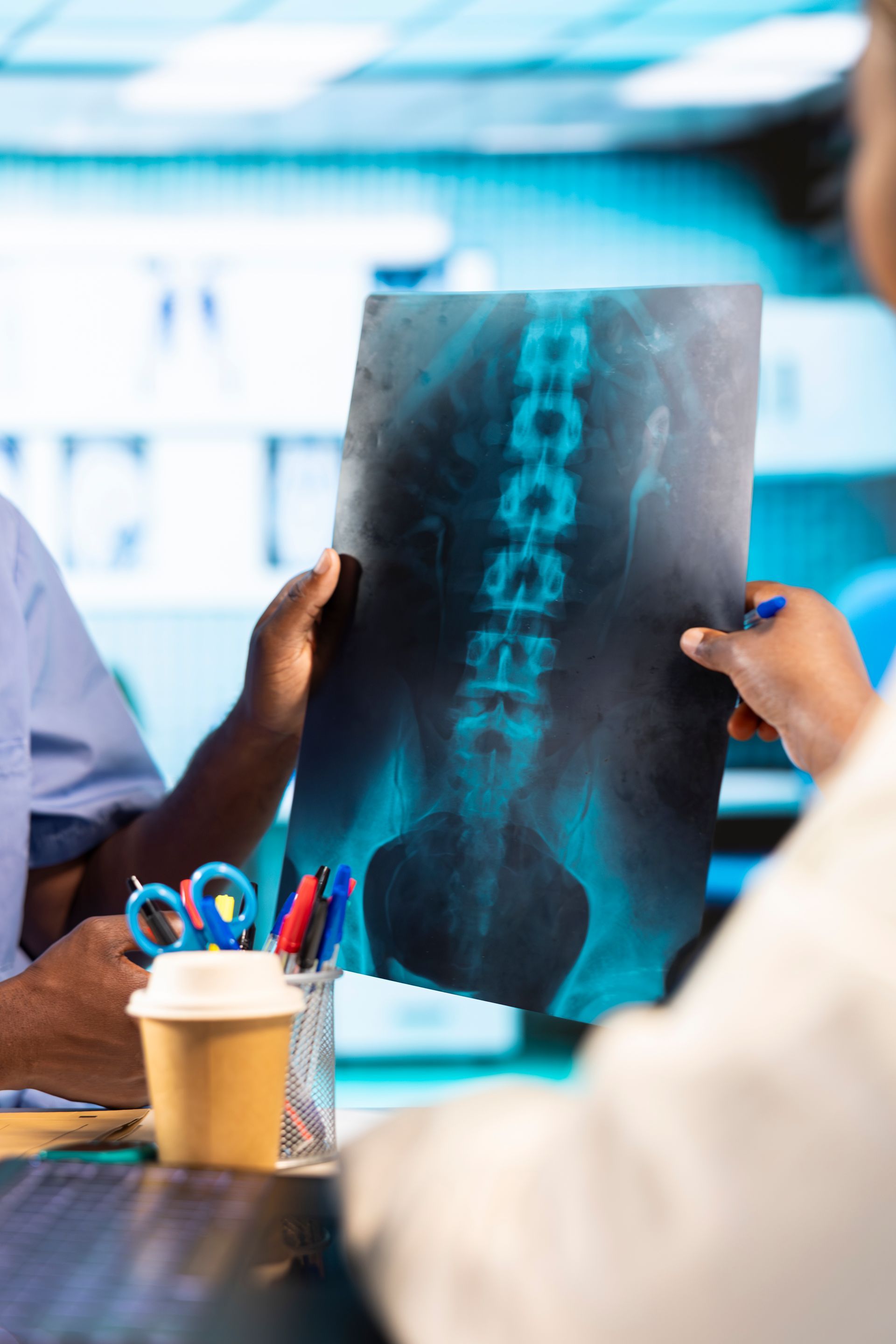
The important thing to understand: all three conditions appear on MRI in people who have no pain at all. Imaging shows structure. It does not tell you whether that structure is the actual source of your symptoms. That determination requires a physical and neurological evaluation — and it's exactly where we start.
Why Most Herniated Discs Don't Require Surgery
Research published in the American Journal of Neuroradiology found that disc herniations are present on MRI in a significant percentage of adults who report no back pain whatsoever. The body has a documented capacity to reabsorb herniated disc material over time, a process called regression, which occurs in the majority of cases when the disc is properly offloaded and the surrounding inflammation is addressed.
Surgery becomes the right answer when there is progressive neurological deficit — meaning measurable loss of motor function, bladder or bowel involvement, or documented nerve damage that is worsening despite conservative care. For patients who have pain, restricted movement, and imaging findings but no progressive neurological loss, non-surgical care is the medically appropriate first course of treatment. If we evaluate you and surgery genuinely appears to be the necessary next step, we will tell you that directly.
Spinal Decompression: Reducing Pressure at the Disc Level
Spinal decompression therapy uses a motorized traction system to gently create negative intradiscal pressure — pulling the vertebrae apart in a controlled, cyclical pattern that encourages the herniated or bulging material to retract away from the nerve. The process also promotes fluid exchange within the disc itself, which supports the disc's capacity to rehydrate and recover over a course of treatment.
Sessions are performed lying down, fully clothed, and take approximately 20–30 minutes. There is no anesthesia, no recovery period, and no time off work. Patients typically notice a reduction in radiating symptoms — the leg pain, foot numbness, or arm tingling — before the local back pain resolves, which is consistent with the nerve root being decompressed.
Class IV Laser Therapy: Addressing the Nerve Root Inflammation
Disc herniation pain is not purely mechanical. The material that pushes through the disc wall triggers a localized inflammatory response around the nerve root, and that inflammation is often responsible for a significant portion of the pain, sensitivity, and muscle guarding patients experience. Decompression reduces the structural pressure. Laser therapy addresses the inflammatory environment around the nerve.
We use a Summus Class IV laser at 60 watts — the same equipment tier used by NFL and Olympic athletic training programs. At that power level, photobiomodulation penetrates to the depth of the spinal structures involved, stimulating cellular repair, reducing prostaglandin activity, and accelerating the resolution of nerve root inflammation. Most area clinics using cold laser therapy operate at 0.5 watts, which does not reach the tissue depth required to affect a disc-level injury.
What a Combined Protocol Looks Like
For most herniated disc patients, we use decompression and laser therapy together because they work on different mechanisms simultaneously. Decompression addresses the mechanical load on the disc and the structural contact with the nerve. Laser therapy addresses the inflammatory response that mechanical offloading alone does not resolve. Neither treatment in isolation does the full job.
A typical course of care runs 12–20 sessions depending on the severity of the herniation, how long the condition has been present, and how your body responds in the first few visits. We track your progress objectively — changes in radiating symptoms, range of motion, and neurological signs — and adjust accordingly. We do not put patients on indefinite maintenance schedules. When the condition is resolved, you're done.
What to Expect: Realistic Timelines for Disc Injury Recovery
Disc herniation recovery does not follow a single timeline, and we won't give you one that isn't honest. Most patients begin noticing meaningful improvement in radiating symptoms within the first four to six sessions. Full resolution of a significant herniation typically takes six to twelve weeks of consistent treatment. Longstanding degenerative disc conditions that have been symptomatic for years take longer than acute herniations that developed in the past few months.
What we can tell you is that the trajectory matters more than any single session. If you are not responding as expected, we will tell you that early — not after you've completed a full course. And if the evaluation suggests that your condition is outside what non-surgical care can reasonably address, we'll say so at the start rather than take your money and time.
Pricing That Doesn't Require a Deductible Conversation
We are a cash-pay clinic with published pricing. Spinal decompression and Class IV laser therapy are not typically covered by insurance, and we've built our fee structure accordingly — so you know exactly what you're committing to before your first session.
- Spinal decompression: published per-session rate, listed on our pricing page
- Class IV laser therapy: $120 per session
- Chiropractic adjustment: $45 per session
- Complimentary consultation: no charge for your first evaluation
If you've already had imaging done, bring the report. We'll review it with you at no cost and give you a direct assessment of whether what we offer is likely to help.
We Also Offer Free Second Opinions on Existing Imaging
If you've already been told surgery is the next step and you're not sure, bring the MRI report. We read imaging regularly and will give you a plain-language assessment of what the findings actually show, what the non-surgical options are, and whether your case is one where conservative care has a realistic chance of producing resolution. We're not going to tell you surgery is wrong if the imaging and your clinical presentation support it. But we will tell you whether you've exhausted the non-surgical options first — because most patients haven't.
Frequently Asked Questions About Herniated Disc Treatment
Can a herniated disc heal without surgery?
Yes, in the majority of cases. The body can reabsorb herniated disc material over time through a process called regression, particularly when the disc is properly offloaded and the surrounding inflammation is treated. Surgery is indicated when there is progressive neurological loss — not simply because a herniation appears on imaging.What is the best treatment for a bulging disc?
For most patients, a combination of spinal decompression and targeted anti-inflammatory therapy produces the best outcomes. Decompression reduces the mechanical pressure on the disc and nearby nerve structures. Laser therapy addresses the inflammatory response that causes much of the radiating pain. The right protocol depends on your specific imaging findings and how your symptoms present clinically.How long does a herniated disc take to heal?
Acute herniations that developed recently often show meaningful improvement within four to six weeks of consistent treatment. Longstanding herniations or degenerative disc conditions typically take longer — often ten to sixteen weeks. The duration depends on the severity of the herniation, how long it has been present, and your body's individual response to treatment.Is spinal decompression painful?
Most patients find spinal decompression comfortable. The traction is applied in a slow, cyclical pattern, and the force is calibrated to your body weight and tolerance. Some patients feel mild muscle soreness after early sessions, which typically resolves within a day. If decompression is not appropriate for your specific condition — such as in cases of severe osteoporosis or certain surgical hardware — we will identify that during your evaluation.Do I need a referral to be seen for a herniated disc?
No referral is needed. You can call or contact us directly to schedule a complimentary consultation. If you have existing MRI or X-ray reports, bring them — we'll review the imaging with you as part of the evaluation at no additional charge.
Ready to Find Out Whether Surgery Is Actually Necessary?
If you've been told a herniated disc means surgery, or if you're living with disc pain and haven't found an answer yet, start with a conversation. We'll evaluate what's actually happening, review your imaging if you have it, and give you a straight assessment of what non-surgical treatment can realistically do for your specific situation. No pressure, no commitment, no charge for the first visit.