The leg hurts. The problem is in your back — and until that compression is addressed, the pain keeps coming back no matter what you do for the leg itself.
Why Your Leg Hurts When the Problem Is in Your Spine
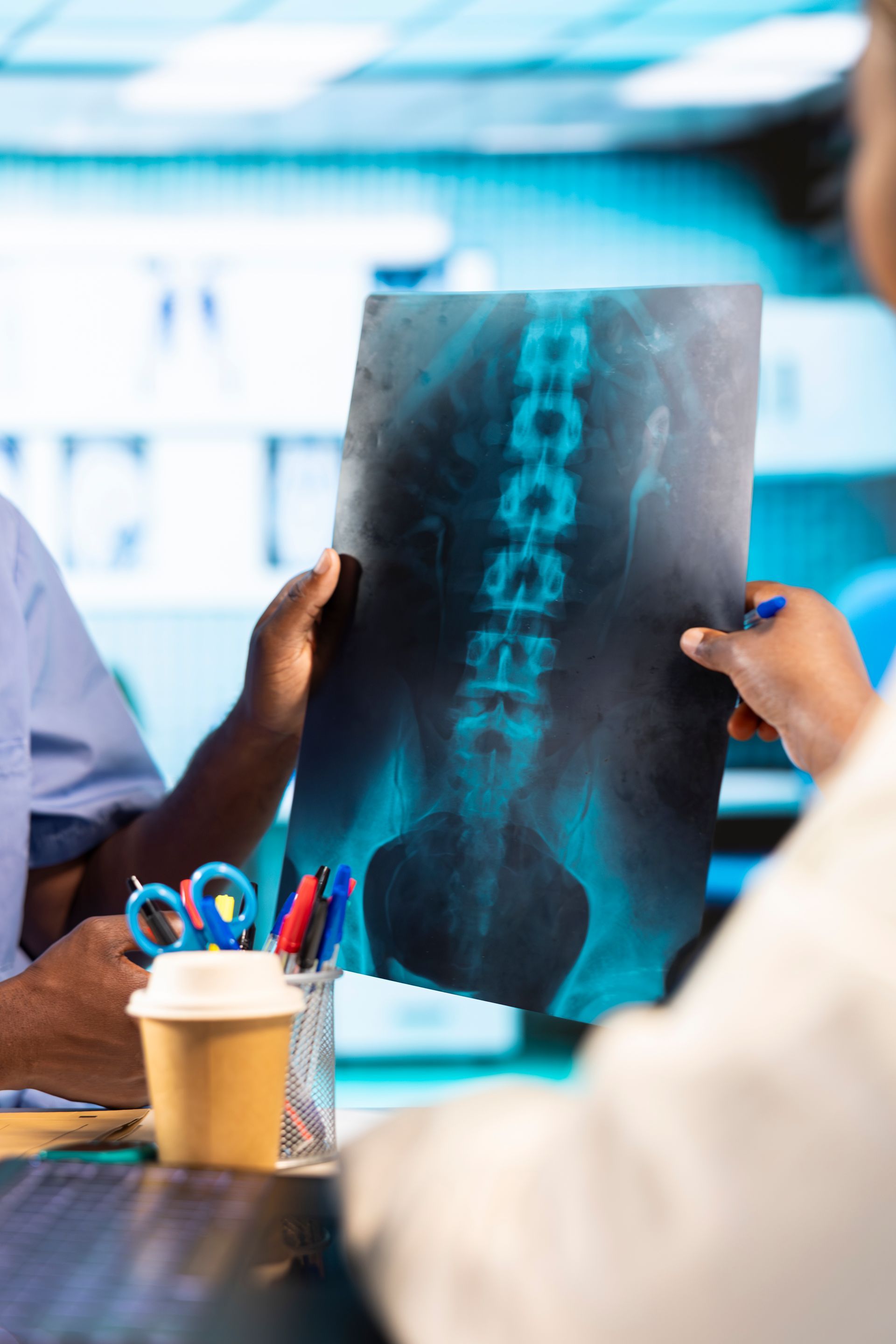
Sciatica isn't a condition in your leg. It's a nerve compression problem in your lower back. The sciatic nerve is the longest nerve in the body, running from the lumbar spine through the buttock and down each leg to the foot. When a disc, bone spur, or inflamed tissue presses against that nerve in the low back, the pain signal travels the entire length of the nerve — which is why you feel it in your thigh, calf, or foot even though nothing is structurally wrong there.
Most patients who come in with radiating leg pain have already tried treating the leg. Stretching, massage, ice, anti-inflammatories — none of it resolves the pain for long because none of it addresses the compression at the source. That's the starting point for how we approach sciatica treatment here.
What Sciatica Actually Feels Like — and When to Get Help Immediately
Sciatic nerve pain varies from person to person, but the pattern is usually recognizable:
- A sharp, burning, or electric pain that runs from the low back or buttock into the leg
- Pain that worsens with sitting, especially for extended periods
- Numbness or tingling in the leg, calf, or foot
- Weakness in the leg or difficulty bearing weight
- Pain on one side only, though both sides can be affected in some cases
Most sciatica is caused by a herniated disc, spinal stenosis, or degenerative disc changes in the lumbar spine — all of which are visible on MRI and addressable without surgery in the majority of cases.
Important: If you are experiencing progressive leg weakness, loss of bladder or bowel control, or numbness in the groin or inner thighs, seek emergency medical care immediately. These symptoms can indicate a serious neurological condition called cauda equina syndrome that requires prompt evaluation.
Spinal Decompression for Nerve Compression
Spinal decompression therapy applies a controlled, gentle traction force to the lumbar spine, creating negative pressure inside the disc. That negative pressure can help retract herniated disc material away from the nerve root and draw fluid and nutrients back into the disc to support healing. For patients whose sciatica is driven by a disc herniation or degenerative disc narrowing, decompression addresses the structural cause directly — not the downstream pain signal in the leg.
Class IV Laser Therapy for Sciatic Nerve Pain
Our Summus Class IV laser operates at 60 watts — a clinical output level used on NFL and Olympic athletes. At that power level, laser energy penetrates deep enough to reach the lumbar tissues and the nerve itself, reducing inflammation, improving circulation, and accelerating cellular repair in the affected area. This is not the same as the 0.5-watt cold lasers used at most area clinics. The difference in therapeutic depth and effect is significant, and it matters when the target tissue is deep spinal nerve involvement.
Free Consultation and MRI Review
If you have an existing MRI or imaging from another provider, we review it at no charge during your initial consultation. You don't need a referral, and you don't need to commit to a treatment plan to get a second opinion. We'll tell you clearly what we see, whether we think we can help, and what the realistic path forward looks like. If your case requires surgical evaluation, we'll tell you that too.
Most Sciatica Does Not End in Surgery
The fear of a disc operation is one of the most common things we hear from new patients. That fear is understandable, but it's also often based on incomplete information. Research consistently shows that the majority of patients with disc-related sciatica improve without surgery when the underlying compression is treated appropriately. Surgery becomes necessary when conservative care fails over an extended period or when neurological deficits are progressing — not as a first response to pain.
Non-surgical spinal decompression combined with laser therapy gives the disc and surrounding tissue the conditions they need to reduce inflammation and begin healing. We've worked with patients who came in convinced they were headed for an operation and left with a treatment plan that resolved their pain without one. We're not promising that outcome for every case — but we are saying that a free evaluation is worth having before you decide anything.
What to Expect From Sciatica Treatment
Sciatica doesn't resolve overnight, and we won't tell you it will. What we can tell you is what a realistic course of care looks like:
- Initial evaluation identifies the source and level of nerve compression
- Decompression sessions are scheduled in a structured series — typically multiple sessions per week in the early phase
- Laser therapy sessions run approximately 10–15 minutes and are painless
- Most patients begin noticing changes in their pain pattern within the first several sessions, though the timeline varies based on how long the condition has been present and how much disc involvement is present
- We reassess as we go and adjust the plan based on how you're responding
Pricing is published on our website. Spinal decompression and laser therapy are available as standalone sessions, and we don't lock patients into long-term packages. You'll know what each visit costs before you book it.
Serving Sciatica Patients Across Northern and Central Wisconsin
Joint & Spine Laser Center is located in Antigo, WI, and sees patients from across a 45-mile radius. If you're driving in from Wausau, Merrill, Rhinelander, Tomahawk, Shawano, or Clintonville, you're not far. Many patients with sciatica tell us they've been managing the pain for months before they found a provider who would look at the actual compression rather than just prescribe rest or refer them to a surgeon.
We're not a wellness center. We're a soft-tissue and spine clinic that has been treating conditions like sciatica for over 20 years. If you've been told to wait it out, a second opinion costs you nothing here.
Common Questions About Sciatica Treatment
How long does sciatica last without treatment?
Sciatica caused by a herniated disc can improve on its own over several weeks to months in some cases, but it often returns or worsens if the underlying compression isn't addressed. Patients who've had recurring episodes for years without a structural evaluation are frequently dealing with a disc or degenerative issue that won't self-resolve. The longer nerve compression persists, the more difficult recovery tends to be.Can sciatica be treated without surgery?
Yes — the majority of sciatica cases are treatable without surgery. Non-surgical spinal decompression is specifically designed to reduce disc-related nerve compression, and Class IV laser therapy addresses the inflammation around the nerve. Surgery is typically considered only when conservative care has failed over an extended period or when neurological deficits are progressing. A free evaluation can clarify whether your case is a candidate for non-surgical care.Why does my leg hurt when the problem is in my back?
The sciatic nerve originates in the lumbar spine and runs the full length of the leg. When something compresses that nerve at the spinal level — a herniated disc, bone spur, or narrowed canal — the pain signal travels along the entire nerve pathway. You feel it in your leg because that's where the nerve goes, not because there's a problem in the leg itself.How is sciatica different from general back pain?
General low back pain is localized to the back and surrounding muscles. Sciatica specifically involves nerve compression that produces radiating symptoms — pain, numbness, tingling, or weakness — that travel from the low back into the buttock, thigh, calf, or foot. The distinction matters because the treatment approach is different: nerve compression requires addressing the structural source, not just managing local muscle pain.Do I need an MRI before coming in?
No. You can come in without any prior imaging and we'll evaluate you from there. If you already have an MRI or X-rays from another provider, bring them — we'll review them at no charge and give you our assessment of what they show. If imaging is needed and you don't have it, we can advise you on next steps.
Ready to Find Out What's Causing Your Leg Pain?
Sciatic nerve pain is one of the more disruptive conditions we treat — it affects how you sit, sleep, drive, and work. If you've been managing it on your own or waiting to see if it resolves, a free consultation is a low-risk way to find out what's actually pressing on the nerve and whether we can help. We'll review your history, assess your symptoms, and give you a straight answer.