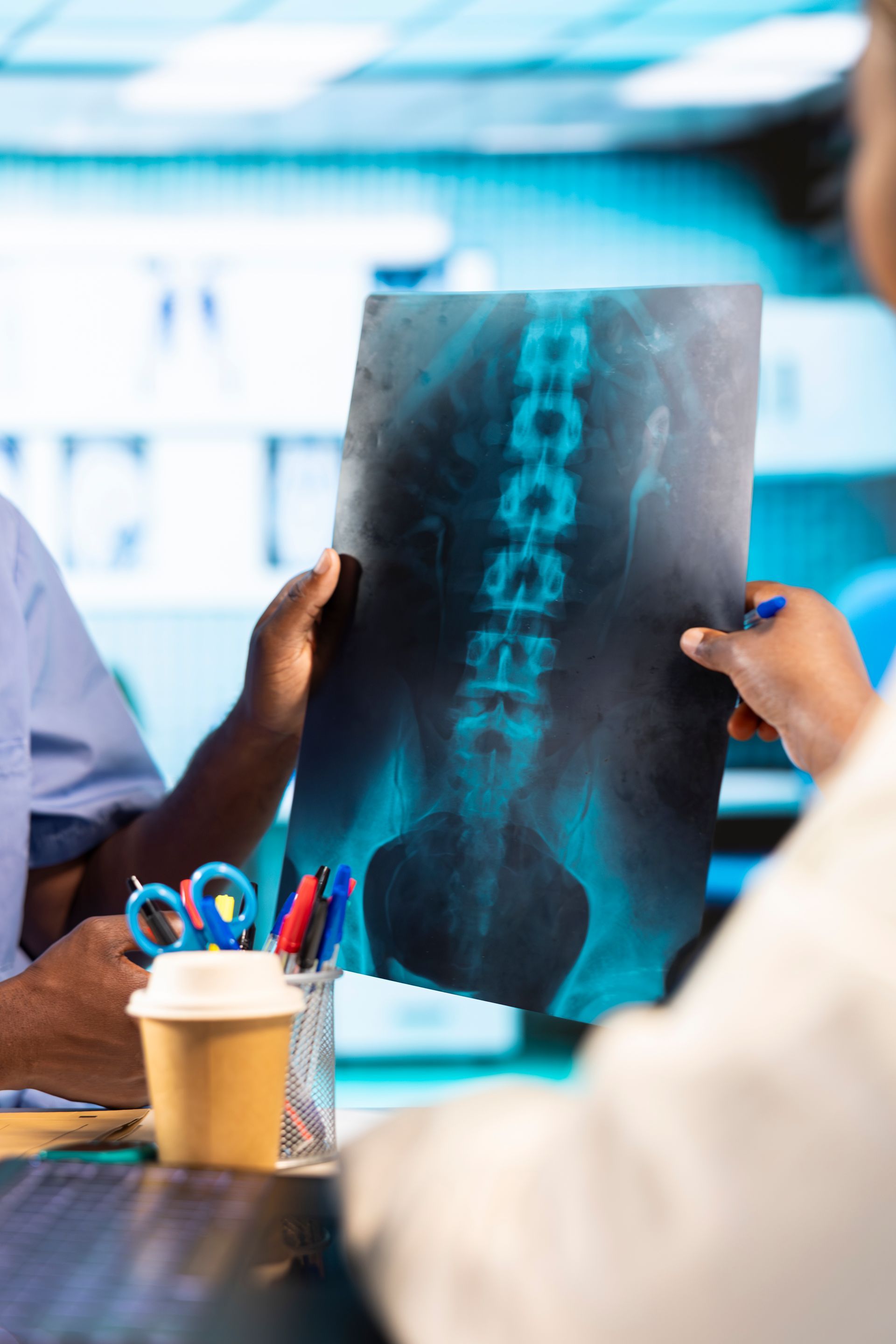
If you've been told a knee replacement is in your future, we'd like to review your imaging before you schedule anything — at no charge, with no pressure.
What's Actually Happening in a Painful Knee
Knee pain treatment in Antigo starts with understanding what's driving the pain. Most patients who come in have been living with a diagnosis — osteoarthritis, a meniscus tear, tendinopathy, or the blunt phrase "bone on bone" — but haven't been told what that actually means for their options. The knee is a load-bearing joint surrounded by soft tissue: cartilage, tendons, bursae, and the meniscus. When any of those structures are inflamed, compressed, or damaged, the joint loses its ability to absorb force. That's when stairs become a project and walking the parking lot becomes a calculation.
The presentations we see most often:
- Knee osteoarthritis — progressive cartilage loss with chronic inflammation and stiffness
- Meniscus injury — tears or degeneration that alter how force is distributed across the joint
- Tendinopathy — patellar or quadriceps tendon pain from repetitive load or poor mechanics
- Post-surgical knee pain — pain or stiffness that persists after a prior procedure
- Bone-on-bone framing — advanced joint space narrowing where cartilage is severely reduced
Why Most Knee Pain Treatments Don't Hold
Cortisone injections are the most common first response to knee arthritis pain. They work by suppressing the inflammatory response in the joint — and for many patients, that suppression lasts six to eight weeks, sometimes less. When it wears off, the underlying tissue is in the same condition it was before the shot. The inflammation returns because the cause of it was never addressed.
Knee replacement surgery is the other end of the spectrum. For patients with high-deductible insurance plans, the out-of-pocket exposure on a joint replacement is substantial — often the largest single medical cost they'll face outside of a hospital stay. Recovery is measured in months, not weeks, and outcomes vary significantly based on the patient's age, weight, and post-surgical rehabilitation. For patients who are told a replacement is "eventually" necessary, that word deserves some scrutiny. Eventually is not a diagnosis. It's a projection — and a lot can change between now and then.
There is meaningful territory between a cortisone shot and a surgical replacement. That's where this clinic operates.
Class IV Laser Therapy for Knee Arthritis and Soft Tissue Injury
The Summus Class IV laser we use delivers 60 watts of therapeutic energy into the joint and surrounding soft tissue. That's not a comparison to make lightly: most area clinics offering "laser therapy" use cold laser devices rated at 0.5 watts. At that output, the energy does not penetrate deeply enough to reach the structures driving knee pain in most patients. The difference between a 60-watt Class IV device and a 0.5-watt cold laser is not a marketing distinction — it's a clinical one.
At therapeutic depth, laser energy stimulates cellular repair in the tissue, reduces inflammation in the joint capsule, and promotes circulation in structures with limited blood supply — including cartilage and the meniscus. Documented outcomes in knee cases include improved range of motion and measurable reduction in swelling. Sessions run approximately 10 to 15 minutes. There is no injection, no incision, and no recovery period.
We Look at More Than the Knee Itself
A knee that loads unevenly doesn't always have a knee problem at its origin. Hip mechanics, foot pronation, and gait patterns all affect how force is distributed through the joint with every step. A patient with medial knee arthritis who also overpronates at the foot is putting asymmetric load on the joint thousands of times a day — and treating only the knee leaves that load pattern intact.
Our evaluation includes the full kinetic chain. If a custom orthotic or gait correction would reduce the daily mechanical stress on your knee, we'll tell you. If the problem is primarily in the joint itself, we'll tell you that too. We offer Foot Levelers custom orthotics through 3D scanning for patients where foot mechanics are contributing to knee load.
When We Can Help and When We Can't
We offer complimentary consultations and will review any existing MRI or X-ray imaging you bring in. If your imaging shows a presentation that responds well to laser therapy — soft tissue inflammation, early to moderate joint space narrowing, meniscus degeneration — we'll tell you clearly what we can offer and what a realistic course of treatment looks like. If your imaging shows a degree of structural damage where conservative care is unlikely to produce meaningful improvement, we'll tell you that too. We don't schedule patients into treatment plans that aren't likely to help them.
What a Course of Treatment Looks Like
Knee pain treatment at this clinic is structured, not open-ended. Most patients begin with a series of Class IV laser therapy sessions — typically scheduled two to three times per week — combined with chiropractic evaluation and, where indicated, hydrotherapy for joint mobility and circulation support. Pricing is published and straightforward: laser therapy at $120 per session, chiropractic adjustments at $45 per session, hydrotherapy at $15 per session or $30 monthly unlimited.
We measure progress against functional goals — stairs, walking distance, sleep quality — not against a maintenance schedule. If treatment is working, you'll know it within the first few sessions. If it isn't, we'll tell you before you've spent more than you should.
Patients We See for Knee Pain
This page is relevant to a wide range of presentations, but the patients who benefit most from what we offer tend to share a few characteristics. They've already been through the standard pathway — primary care, imaging, a referral, maybe a cortisone shot — and they're looking for something that addresses the tissue rather than suppressing the symptom. Many are in their 50s, 60s, or 70s, with high-deductible plans that make surgery a serious financial decision, not just a medical one. Some are post-surgical, still dealing with pain or stiffness after a prior knee procedure. Others have been told they're "not bad enough yet" for replacement and are looking for what to do in the meantime.
We also see patients driving in from Wausau, Merrill, Rhinelander, and Tomahawk who haven't been able to find this level of laser therapy closer to home. If you're weighing a long drive against a long recovery, the drive is the easier calculation.
The Equipment Behind the Treatment
The Summus Medical Laser we use is a 60-watt Class IV device — the same tier of equipment used by NFL and Olympic athletic training staffs. The founder of this clinic was involved in developing the high-intensity laser platform in partnership with the manufacturer, which means the clinical protocols we use weren't learned from a weekend seminar. They were built from the ground up.
Class IV laser therapy at this output level is not the same treatment as the cold laser or low-level laser therapy offered at many chiropractic and physical therapy offices in the region. If you've tried laser therapy before and didn't see results, it's worth asking what wattage device was used. The answer matters clinically.
Knee Pain Questions We Hear Most
Does laser therapy actually work for bone-on-bone knee pain?
It depends on what's driving the pain. In cases of advanced joint space narrowing, the laser targets the inflamed soft tissue surrounding the joint — the synovium, tendons, and bursa — rather than regenerating cartilage. Many patients with bone-on-bone diagnoses have significant soft tissue inflammation that responds well to laser therapy, even when the cartilage itself is severely reduced. We review imaging before recommending treatment so we can give you an honest answer specific to your case.How do I avoid knee replacement surgery?
The most useful step is understanding what's actually causing your pain and whether conservative treatment can address it before the joint deteriorates further. Reducing inflammation, improving the mechanics loading the joint, and supporting tissue repair through Class IV laser therapy can slow progression and restore function in many patients. We offer a complimentary consultation and will review your existing imaging to assess whether you're a candidate.How much does knee pain treatment cost without insurance?
Laser therapy sessions are $120 each. Chiropractic adjustments are $45. Hydrotherapy is $15 per session or $30 for monthly unlimited access. All pricing is published on our pricing page. There are no hidden fees and no required package purchases.Can laser therapy help a meniscus injury without surgery?
Meniscus tears vary significantly in type and severity. Degenerative meniscus tears — the most common presentation in patients over 50 — often respond well to laser therapy because the primary driver of pain is inflammation rather than a structural defect requiring repair. Acute traumatic tears in younger patients are a different situation. We review imaging and give you a direct assessment of whether conservative treatment is appropriate for your specific presentation.What if I've already had knee surgery and still have pain?
Post-surgical knee pain is a presentation we see regularly. Scar tissue, residual inflammation, and altered mechanics after a prior procedure can all be addressed through laser therapy and soft tissue treatment. We evaluate post-surgical cases the same way we evaluate any other — by looking at what's actually happening in the tissue and telling you honestly whether we can help.
Start With a Conversation
A complimentary consultation takes about 20 minutes. Bring any imaging you have — X-rays, MRI reports — and we'll review it with you at no charge. You'll leave knowing whether you're a candidate for treatment and what that treatment would look like, including the cost. No commitment required.
Call us at (715) 623-2123 or use the link below to request your consultation.